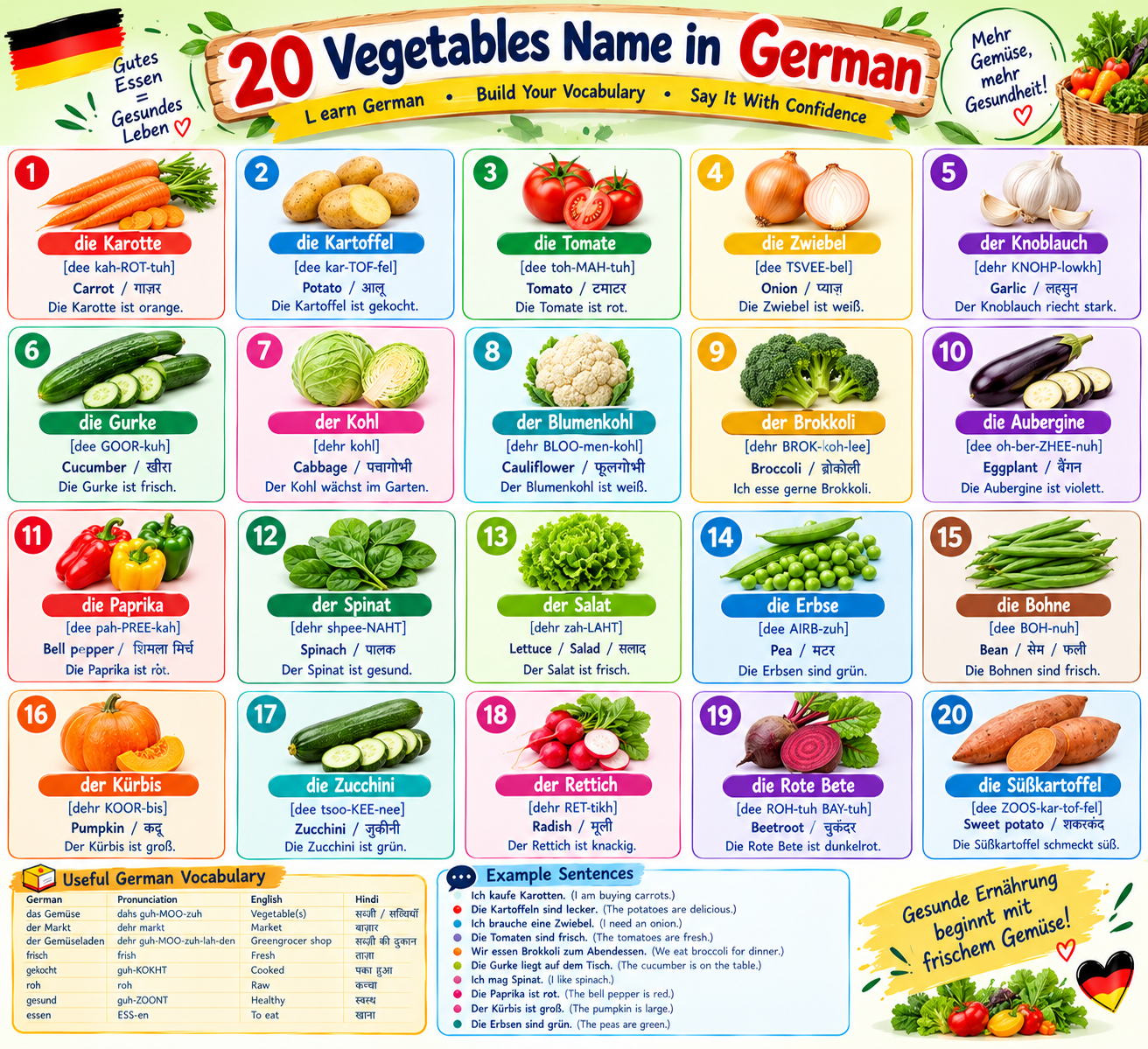
German Vegetable Vocabulary with Pronunciation, English and Hindi Meanings
Learning the vegetables name in German is an excellent way to build practical everyday vocabulary. Vegetable names are useful when shopping, cooking, visiting a restaurant, talking about healthy food, or describing meals.
In this article, you will learn 20 common vegetables in German with their pronunciation, English translation, Hindi meaning, and simple example sentences.
20 Vegetables Name in German
No.
German Vegetable
Pronunciation
English Translation
Hindi Translation
1
die Karotte
dee kah-ROT-tuh
Carrot
गाजर
2
die Kartoffel
dee kar-TOF-fel
Potato
आलू
3
die Tomate
dee toh-MAH-tuh
Tomato
टमाटर
4
die Zwiebel
dee TSVEE-bel
Onion
प्याज़
5
der Knoblauch
dehr KNOHP-lowkh
Garlic
लहसुन
6
die Gurke
dee GOOR-kuh
Cucumber
खीरा
7
der Kohl
dehr kohl
Cabbage
पत्तागोभी
8
der Blumenkohl
dehr BLOO-men-kohl
Cauliflower
फूलगोभी
9
der Brokkoli
dehr BROK-koh-lee
Broccoli
ब्रोकोली
10
die Aubergine
dee oh-ber-ZHEE-nuh
Eggplant
बैंगन
11
die Paprika
dee pah-PREE-kah
Bell pepper
शिमला मिर्च
12
der Spinat
dehr shpee-NAHT
Spinach
पालक
13
der Salat
dehr zah-LAHT
Lettuce / Salad
सलाद / लेट्यूस
14
die Erbse
dee AIRB-zuh
Pea
मटर
15
die Bohne
dee BOH-nuh
Bean
सेम / फली
16
der Kürbis
dehr KOOR-bis
Pumpkin / Squash
कद्दू
17
die Zucchini
dee tsoo-KEE-nee
Zucchini
ज़ुकीनी
18
der Rettich
dehr RET-tikh
Radish
मूली
19
die Rote Bete
dee ROH-tuh BAY-tuh
Beetroot
चुकंदर
20
die Süßkartoffel
dee ZOOS-kar-tof-fel
Sweet potato
शकरकंद
vegetables name in german and english
Note: The pronunciations are simplified English-style guides for beginners. German pronunciation can vary slightly by region.
German Vegetables Explained
1. Die Karotte – Carrot
Die Karotte means carrot in German. Another common German word for carrot is die Möhre.
Example: Die Karotte ist orange.
The carrot is orange.
2. Die Kartoffel – Potato
Die Kartoffel means potato. Potatoes are an important ingredient in many German dishes.
Example: Die Kartoffel ist gekocht.
The potato is cooked.
3. Die Tomate – Tomato
Die Tomate means tomato in German. It is commonly used in salads, sauces, and many everyday meals.
Example: Die Tomate ist rot.
The tomato is red.
4. Die Zwiebel – Onion
Die Zwiebel means onion. It is widely used to add flavor to food.
Example: Ich schneide eine Zwiebel.
I am cutting an onion.
5. Der Knoblauch – Garlic
Der Knoblauch means garlic. It is commonly used as a seasoning in cooking.
Example: Der Knoblauch riecht stark.
The garlic smells strong.
6. Die Gurke – Cucumber
Die Gurke means cucumber. It is often eaten raw in salads or as a side dish.
Example: Die Gurke ist frisch.
The cucumber is fresh.
7. Der Kohl – Cabbage
Der Kohl is a general German word for cabbage and can also refer to the cabbage family depending on context.
Example: Der Kohl wächst im Garten.
The cabbage grows in the garden.
8. Der Blumenkohl – Cauliflower
Der Blumenkohl means cauliflower. The word literally contains Blumen and Kohl.
Example: Der Blumenkohl ist weiß.
The cauliflower is white.
9. Der Brokkoli – Broccoli
Der Brokkoli means broccoli. It is a popular green vegetable.
Example: Ich esse gerne Brokkoli.
I like eating broccoli.
10. Die Aubergine – Eggplant
Die Aubergine means eggplant or aubergine. It is widely used in European and international cooking.
Example: Die Aubergine ist violett.
The eggplant is purple.
11. Die Paprika – Bell Pepper
Die Paprika means pepper or bell pepper. Depending on context, Paprika can refer to the vegetable itself or paprika spice.
Example: Die Paprika ist rot.
The bell pepper is red.
12. Der Spinat – Spinach
Der Spinat means spinach. It is commonly used in soups, salads, and cooked dishes.
Example: Der Spinat ist gesund.
Spinach is healthy.
13. Der Salat – Lettuce / Salad
Der Salat can mean salad or lettuce, depending on context.
Example: Der Salat ist frisch.
The lettuce is fresh.
14. Die Erbse – Pea
Die Erbse means pea. The plural is die Erbsen.
Example: Die Erbsen sind grün.
The peas are green.
15. Die Bohne – Bean
Die Bohne means bean. The plural is die Bohnen.
Example: Die Bohnen sind frisch.
The beans are fresh.
16. Der Kürbis – Pumpkin
Der Kürbis means pumpkin or squash. It is especially associated with autumn dishes and decorations.
Example: Der Kürbis ist groß.
The pumpkin is large.
17. Die Zucchini – Zucchini
Die Zucchini means zucchini. The word is commonly used in German just as it is in English.
Example: Die Zucchini ist grün.
The zucchini is green.
18. Der Rettich – Radish
Der Rettich means radish, particularly larger radish varieties. Another common word is das Radieschen for a small radish.
Example: Der Rettich ist knackig.
The radish is crisp.
19. Die Rote Bete – Beetroot
Die Rote Bete means beetroot or beet. It has a distinctive deep red color.
Example: Die Rote Bete ist dunkelrot.
The beetroot is dark red.
20. Die Süßkartoffel – Sweet Potato
Die Süßkartoffel means sweet potato. The word combines süß (sweet) and Kartoffel (potato).
Example: Die Süßkartoffel schmeckt süß.
The sweet potato tastes sweet.
Useful German Vegetable Vocabulary
German
Pronunciation
English
Hindi
das Gemüse
dahs guh-MOO-zuh
Vegetable(s)
सब्ज़ी / सब्ज़ियाँ
das Gemüsegeschäft
guh-MOO-zuh-guh-SHEFT
Vegetable shop
सब्ज़ी की दुकान
der Markt
dehr markt
Market
बाज़ार
frisch
frish
Fresh
ताज़ा
gekocht
guh-KOKHT
Cooked
पका हुआ
roh
roh
Raw
कच्चा
gesund
guh-ZOONT
Healthy
स्वस्थ
schneiden
SHNY-den
To cut
काटना
kochen
KOKH-en
To cook
पकाना
essen
ESS-en
To eat
खाना
German Vegetable Names in Everyday Sentences
Learning individual words is useful, but practicing complete sentences makes them easier to remember.
Ich kaufe Karotten.
I am buying carrots.
Die Kartoffeln sind lecker.
The potatoes are delicious.
Ich brauche eine Zwiebel.
I need an onion.
Die Tomaten sind frisch.
The tomatoes are fresh.
Wir essen Brokkoli zum Abendessen.
We eat broccoli for dinner.
Die Gurke liegt auf dem Tisch.
The cucumber is on the table.
Ich mag Spinat.
I like spinach.
Die Paprika ist rot.
The bell pepper is red.
Der Kürbis ist groß.
The pumpkin is large.
Die Erbsen sind grün.
The peas are green.
Vegetables in German: Singular and Plural
Learning the plural forms is helpful when speaking about more than one vegetable.
Singular
Plural
English
die Karotte
die Karotten
carrot / carrots
die Kartoffel
die Kartoffeln
potato / potatoes
die Tomate
die Tomaten
tomato / tomatoes
die Zwiebel
die Zwiebeln
onion / onions
die Gurke
die Gurken
cucumber / cucumbers
die Erbse
die Erbsen
pea / peas
die Bohne
die Bohnen
bean / beans
die Paprika
die Paprikas
pepper / peppers
die Zucchini
die Zucchini
zucchini / zucchinis
der Kürbis
die Kürbisse
pumpkin / pumpkins
Quick Revision: 20 Vegetables in German
die Karotte – Carrot
die Kartoffel – Potato
die Tomate – Tomato
die Zwiebel – Onion
der Knoblauch – Garlic
die Gurke – Cucumber
der Kohl – Cabbage
der Blumenkohl – Cauliflower
der Brokkoli – Broccoli
die Aubergine – Eggplant
die Paprika – Bell pepper
der Spinat – Spinach
der Salat – Lettuce / Salad
die Erbse – Pea
die Bohne – Bean
der Kürbis – Pumpkin
die Zucchini – Zucchini
der Rettich – Radish
die Rote Bete – Beetroot
die Süßkartoffel – Sweet potato
Frequently Asked Questions
1. How do you say vegetable in German?
Vegetable is das Gemüse in German.
2. How do you say carrot in German?
Carrot is die Karotte in German. Die Möhre is another common word.
3. How do you say potato in German?
Potato is die Kartoffel in German.
4. How do you say tomato in German?
Tomato is die Tomate in German.
5. How do you say onion in German?
Onion is die Zwiebel in German.
6. How do you say garlic in German?
Garlic is der Knoblauch in German.
7. How do you say cucumber in German?
Cucumber is die Gurke in German.
8. How do you say cabbage in German?
Cabbage is commonly der Kohl in German.
9. How do you say cauliflower in German?
Cauliflower is der Blumenkohl in German.
10. How do you say broccoli in German?
Broccoli is der Brokkoli in German.
11. How do you say eggplant in German?
Eggplant is die Aubergine in German.
12. How do you say bell pepper in German?
Bell pepper is die Paprika in German.
13. How do you say spinach in German?
Spinach is der Spinat in German.
14. How do you say pea in German?
Pea is die Erbse in German.
15. How do you say bean in German?
Bean is die Bohne in German.
16. How do you say pumpkin in German?
Pumpkin is der Kürbis in German.
17. How do you say zucchini in German?
Zucchini is die Zucchini in German.
18. How do you say radish in German?
Radish is der Rettich in German. Das Radieschen refers to a small radish.
19. How do you say beetroot in German?
Beetroot is die Rote Bete in German.
20. How do you say sweet potato in German?
Sweet potato is die Süßkartoffel in German.
Conclusion
Learning 20 vegetables name in German can make everyday German conversations much easier. Words such as die Karotte, die Kartoffel, die Tomate, die Zwiebel, der Brokkoli, and der Spinat are useful when shopping, cooking, ordering food, or talking about healthy eating.
For faster learning, practice each vegetable with its German article and use it in a short sentence. With regular revision, these German vegetable names will become a natural part of your everyday vocabulary.