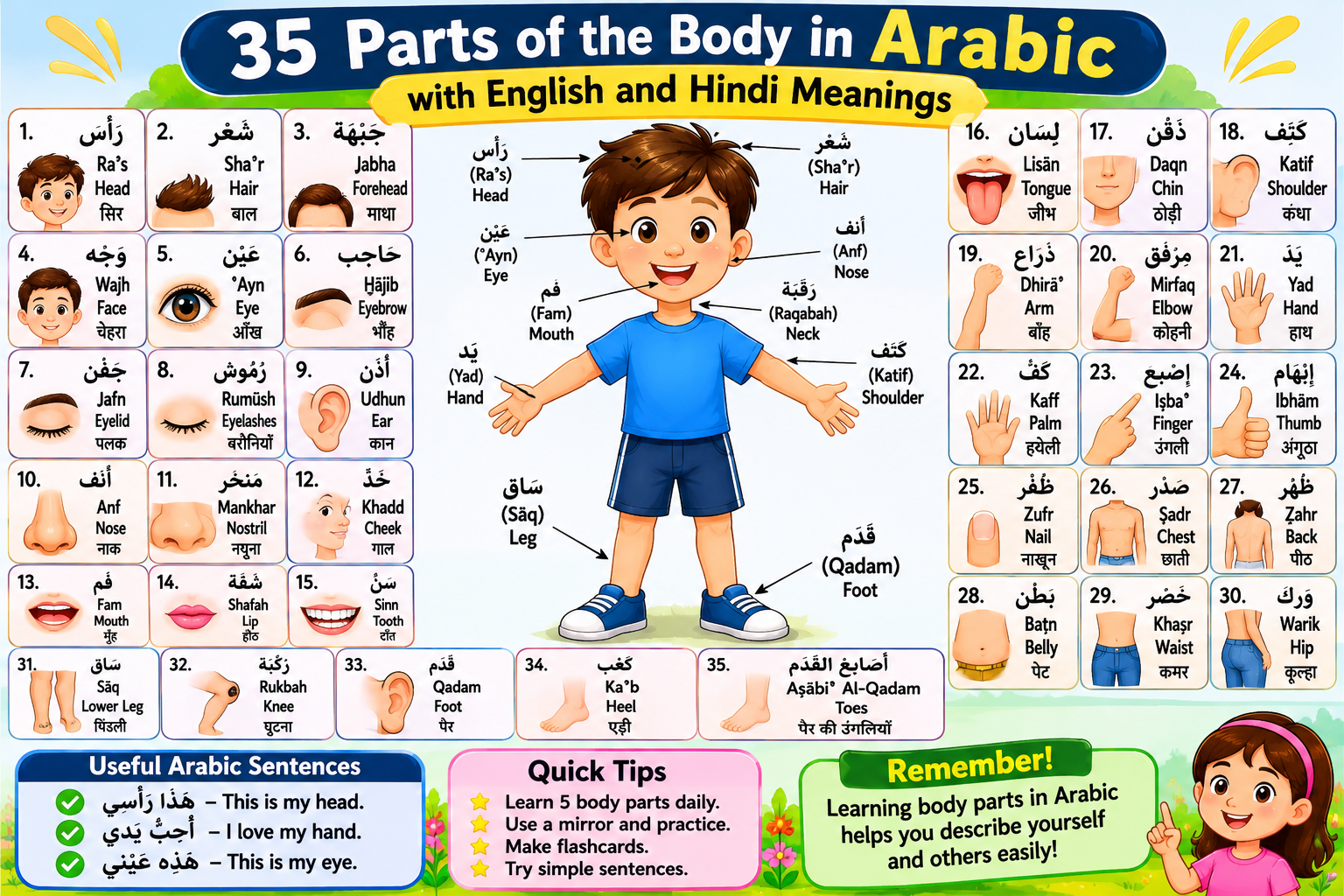
Parts of the Body in Arabic
35 External Body Parts with English and Hindi Meanings
The human body has many different external parts, such as the head, eyes, ears, hands, legs, and feet. Learning their names in Arabic helps you describe people, understand basic conversations, and improve your everyday vocabulary.
In this article, you will learn 35 external body parts in Arabic with English and Hindi meanings, pronunciation, useful sentences, and related vocabulary.
1. 35 External Body Parts Names in Arabic
Here is a complete list of commonly used external body parts in Arabic.
| No. | Arabic Name | Pronunciation | English Meaning | Hindi Meaning |
|---|---|---|---|---|
| 1 | رَأْس | Ra’s | Head | सिर |
| 2 | شَعْر | Shaʿr | Hair | बाल |
| 3 | جَبْهَة | Jabha | Forehead | माथा |
| 4 | وَجْه | Wajh | Face | चेहरा |
| 5 | عَيْن | ʿAyn | Eye | आँख |
| 6 | حَاجِب | Ḥājib | Eyebrow | भौंह |
| 7 | جَفْن | Jafn | Eyelid | पलक |
| 8 | رُمُوش | Rumūsh | Eyelashes | बरौनियाँ |
| 9 | أُذُن | Udhun | Ear | कान |
| 10 | أَنْف | Anf | Nose | नाक |
| 11 | مَنْخَر | Mankhar | Nostril | नथुना |
| 12 | خَدّ | Khadd | Cheek | गाल |
| 13 | فَم | Fam | Mouth | मुँह |
| 14 | شَفَة | Shafah | Lip | होंठ |
| 15 | سِنّ | Sinn | Tooth | दाँत |
| 16 | لِسَان | Lisān | Tongue | जीभ |
| 17 | ذَقْن | Daqn | Chin | ठोड़ी |
| 18 | رَقَبَة | Raqabah | Neck | गर्दन |
| 19 | كَتِف | Katif | Shoulder | कंधा |
| 20 | ذِرَاع | Dhirāʿ | Arm | बाँह |
| 21 | مِرْفَق | Mirfaq | Elbow | कोहनी |
| 22 | يَد | Yad | Hand | हाथ |
| 23 | كَفّ | Kaff | Palm | हथेली |
| 24 | إِصْبَع | Iṣbaʿ | Finger | उंगली |
| 25 | إِبْهَام | Ibhām | Thumb | अंगूठा |
| 26 | ظُفْر | Zufr | Nail | नाखून |
| 27 | صَدْر | Ṣadr | Chest | छाती |
| 28 | ظَهْر | Ẓahr | Back | पीठ |
| 29 | بَطْن | Baṭn | Belly / Abdomen | पेट |
| 30 | خَصْر | Khaṣr | Waist | कमर |
| 31 | وَرِك | Warik | Hip | कूल्हा |
| 32 | سَاق | Sāq | Lower Leg | पिंडली / निचला पैर |
| 33 | رُكْبَة | Rukbah | Knee | घुटना |
| 34 | قَدَم | Qadam | Foot | पैर |
| 35 | كَعْب | Kaʿb | Heel | एड़ी |
Note: Arabic vocabulary can vary slightly between regions. The words above are commonly understood in Modern Standard Arabic.
2. Detailed Explanation of External Body Parts in Arabic
Let’s understand some of the most common body parts and their uses.
1. Head – رَأْس (Ra’s)
- Arabic: رَأْس
- English: Head
- Hindi: सिर
The head is the uppermost part of the human body. It includes the face, hair, eyes, ears, nose, and mouth.
2. Hair – شَعْر (Shaʿr)
- Arabic: شَعْر
- English: Hair
- Hindi: बाल
Hair grows on the head and can have different colors, lengths, and textures.
3. Face – وَجْه (Wajh)
- Arabic: وَجْه
- English: Face
- Hindi: चेहरा
The face is the front part of the head. It includes the eyes, nose, mouth, cheeks, and chin.
4. Eye – عَيْن (ʿAyn)
- Arabic: عَيْن
- English: Eye
- Hindi: आँख
Eyes help us see the world around us. The Arabic plural form is عُيُون (ʿUyūn), meaning eyes.
5. Eyebrow – حَاجِب (Ḥājib)
- Arabic: حَاجِب
- English: Eyebrow
- Hindi: भौंह
Eyebrows are the strips of hair above the eyes. They help protect the eyes from sweat.
6. Ear – أُذُن (Udhun)
- Arabic: أُذُن
- English: Ear
- Hindi: कान
Ears help us hear sounds. The plural is آذَان (Ādhān).
7. Nose – أَنْف (Anf)
- Arabic: أَنْف
- English: Nose
- Hindi: नाक
The nose is located in the middle of the face. It helps us smell and breathe.
8. Mouth – فَم (Fam)
- Arabic: فَم
- English: Mouth
- Hindi: मुँह
The mouth is used for eating, drinking, speaking, and smiling.
9. Teeth – أَسْنَان (Asnān)
- Arabic: أَسْنَان
- English: Teeth
- Hindi: दाँत
Teeth help us bite and chew food. The singular form is سِنّ (Sinn), meaning one tooth.
10. Tongue – لِسَان (Lisān)
- Arabic: لِسَان
- English: Tongue
- Hindi: जीभ
The tongue helps us taste food and pronounce words.
11. Neck – رَقَبَة (Raqabah)
- Arabic: رَقَبَة
- English: Neck
- Hindi: गर्दन
The neck connects the head to the body and allows us to turn and move our head.
12. Shoulder – كَتِف (Katif)
- Arabic: كَتِف
- English: Shoulder
- Hindi: कंधा
The shoulder connects the arm to the upper body.
13. Arm – ذِرَاع (Dhirāʿ)
- Arabic: ذِرَاع
- English: Arm
- Hindi: बाँह
The arm extends from the shoulder to the hand and helps us lift, carry, and move objects.
14. Elbow – مِرْفَق (Mirfaq)
- Arabic: مِرْفَق
- English: Elbow
- Hindi: कोहनी
The elbow is the joint in the middle of the arm. It allows the arm to bend.
15. Hand – يَد (Yad)
- Arabic: يَد
- English: Hand
- Hindi: हाथ
Hands help us hold objects, write, work, and perform everyday activities.
16. Finger – إِصْبَع (Iṣbaʿ)
- Arabic: إِصْبَع
- English: Finger
- Hindi: उंगली
Each hand normally has five fingers, including the thumb.
17. Chest – صَدْر (Ṣadr)
- Arabic: صَدْر
- English: Chest
- Hindi: छाती
The chest is the front upper part of the body.
18. Back – ظَهْر (Ẓahr)
- Arabic: ظَهْر
- English: Back
- Hindi: पीठ
The back is the rear part of the body, extending from the shoulders toward the waist.
19. Belly – بَطْن (Baṭn)
- Arabic: بَطْن
- English: Belly / Abdomen
- Hindi: पेट
The belly is the front area of the body between the chest and pelvis.
20. Leg – سَاق (Sāq)
- Arabic: سَاق
- English: Lower Leg
- Hindi: पिंडली / निचला पैर
The word سَاق refers specifically to the lower part of the leg. The general word for leg is رِجْل (Rijl).
21. Knee – رُكْبَة (Rukbah)
- Arabic: رُكْبَة
- English: Knee
- Hindi: घुटना
The knee is the joint in the middle of the leg. It helps us bend our legs and walk.
22. Foot – قَدَم (Qadam)
- Arabic: قَدَم
- English: Foot
- Hindi: पैर
The foot supports the body and helps us stand, walk, and run.
3. More Useful Arabic Vocabulary Related to the Body
These additional words will help you describe body parts and appearance in Arabic.
| Arabic Word | Pronunciation | English Meaning | Hindi Meaning |
|---|---|---|---|
| جِلْد | Jild | Skin | त्वचा |
| لِحْيَة | Liḥyah | Beard | दाढ़ी |
| شَارِب | Shārib | Moustache | मूँछ |
| شَفَتَان | Shafātān | Two Lips | दो होंठ |
| أَصَابِع القَدَم | Aṣābiʿ Al-Qadam | Toes | पैर की उंगलियाँ |
| إِبْط | Ibṭ | Armpit | बगल |
| ظَهْر اليَد | Ẓahr Al-Yad | Back of the Hand | हाथ का पिछला भाग |
| رَاحَة اليَد | Rāḥat Al-Yad | Palm of the Hand | हथेली |
| مِعْصَم | Miʿṣam | Wrist | कलाई |
| فَخِذ | Fakhdh | Thigh | जाँघ |
| كَاحِل | Kāḥil | Ankle | टखना |
| رُكْبَتَان | Rukbatān | Two Knees | दोनों घुटने |
| حَاجِبَان | Ḥājibān | Two Eyebrows | दोनों भौंहें |
| رَمْش | Ramsh | Eyelash | पलक का बाल |
| جَبِين | Jabīn | Forehead | ललाट |
4. Useful Arabic Sentences About Body Parts
Practice these sentences to learn how to use body-part vocabulary in everyday conversations.
| Arabic Sentence | Pronunciation | English Translation | Hindi Translation |
|---|---|---|---|
| هَذَا رَأْسِي | Hādhā Ra’sī | This is my head. | यह मेरा सिर है। |
| هَذِهِ عَيْنِي | Hādhihi ʿAynī | This is my eye. | यह मेरी आँख है। |
| هَذَا أَنْفِي | Hādhā Anfī | This is my nose. | यह मेरी नाक है। |
| هَذَا فَمِي | Hādhā Famī | This is my mouth. | यह मेरा मुँह है। |
| هَذِهِ يَدِي | Hādhihi Yadī | This is my hand. | यह मेरा हाथ है। |
| هَذَا قَدَمِي | Hādhā Qadamī | This is my foot. | यह मेरा पैर है। |
| أَيْنَ أُذُنُكَ؟ | Ayna Udhunuka? | Where is your ear? | तुम्हारा कान कहाँ है? |
| أَغْسِلُ يَدَيَّ | Aghsilu Yadayya | I wash my hands. | मैं अपने हाथ धोता/धोती हूँ। |
| عِنْدِي أَلَمٌ فِي رُكْبَتِي | ʿIndī Alamun Fī Rukbatī | I have pain in my knee. | मेरे घुटने में दर्द है। |
| شَعْرِي طَوِيلٌ | Shaʿrī Ṭawīl | My hair is long. | मेरे बाल लंबे हैं। |
5. Singular and Plural Body Parts in Arabic
Arabic nouns can have different singular and plural forms. Learning both forms will help you speak more naturally.
| Singular Arabic | Plural Arabic | English Meaning |
|---|---|---|
| عَيْن | عُيُون | Eye / Eyes |
| أُذُن | آذَان | Ear / Ears |
| يَد | أَيْدٍ | Hand / Hands |
| قَدَم | أَقْدَام | Foot / Feet |
| إِصْبَع | أَصَابِع | Finger / Fingers |
| سِنّ | أَسْنَان | Tooth / Teeth |
| شَفَة | شِفَاه | Lip / Lips |
| خَدّ | خُدُود | Cheek / Cheeks |
| كَتِف | أَكْتَاف | Shoulder / Shoulders |
| رُكْبَة | رُكَب | Knee / Knees |
6. Tips to Remember Body Parts Names in Arabic
Learning Arabic vocabulary becomes easier when you connect words with real objects and daily activities. Try these simple techniques:
- Learn five words daily: Start with common words such as head, eyes, nose, mouth, and hands.
- Use a mirror: Point to different body parts and say their Arabic names.
- Practice pronunciation: Repeat each word aloud several times.
- Use flashcards: Write Arabic words on one side and English and Hindi meanings on the other.
- Practice sentences: Make simple sentences such as هَذِهِ يَدِي (This is my hand).
- Revise regularly: Review previously learned words to improve your memory.
7. Frequently Asked Questions (FAQs)
1. What is the Arabic word for the human body?
The Arabic word for the human body is جِسْم (Jism).
2. What is head called in Arabic?
Head is called رَأْس (Ra’s) in Arabic.
3. What is eye called in Arabic?
Eye is called عَيْن (ʿAyn), and its plural form is عُيُون (ʿUyūn).
4. What is hand called in Arabic?
Hand is called يَد (Yad) in Arabic. Its plural form is أَيْدٍ (Aydin).
5. What is leg called in Arabic?
The general Arabic word for leg is رِجْل (Rijl). The word سَاق (Sāq) refers specifically to the lower leg.
6. What is foot called in Arabic?
Foot is called قَدَم (Qadam) in Arabic. Its plural form is أَقْدَام (Aqdām).
7. What is nose called in Arabic?
Nose is called أَنْف (Anf) in Arabic.
8. What is mouth called in Arabic?
Mouth is called فَم (Fam) in Arabic.
9. What is hair called in Arabic?
Hair is called شَعْر (Shaʿr) in Arabic.
10. How do you say body parts in Arabic?
Body parts can be called أَجْزَاء الجِسْم (Ajzāʾ Al-Jism) in Arabic.
Conclusion
Learning the parts of the body in Arabic is a useful way to build your basic Arabic vocabulary. Start with common words such as رَأْس (head), عَيْن (eye), أَنْف (nose), يَد (hand), and قَدَم (foot).
Practice these words every day and use them in simple sentences. With regular revision, you will gradually become more confident using Arabic body-part vocabulary in everyday conversations.