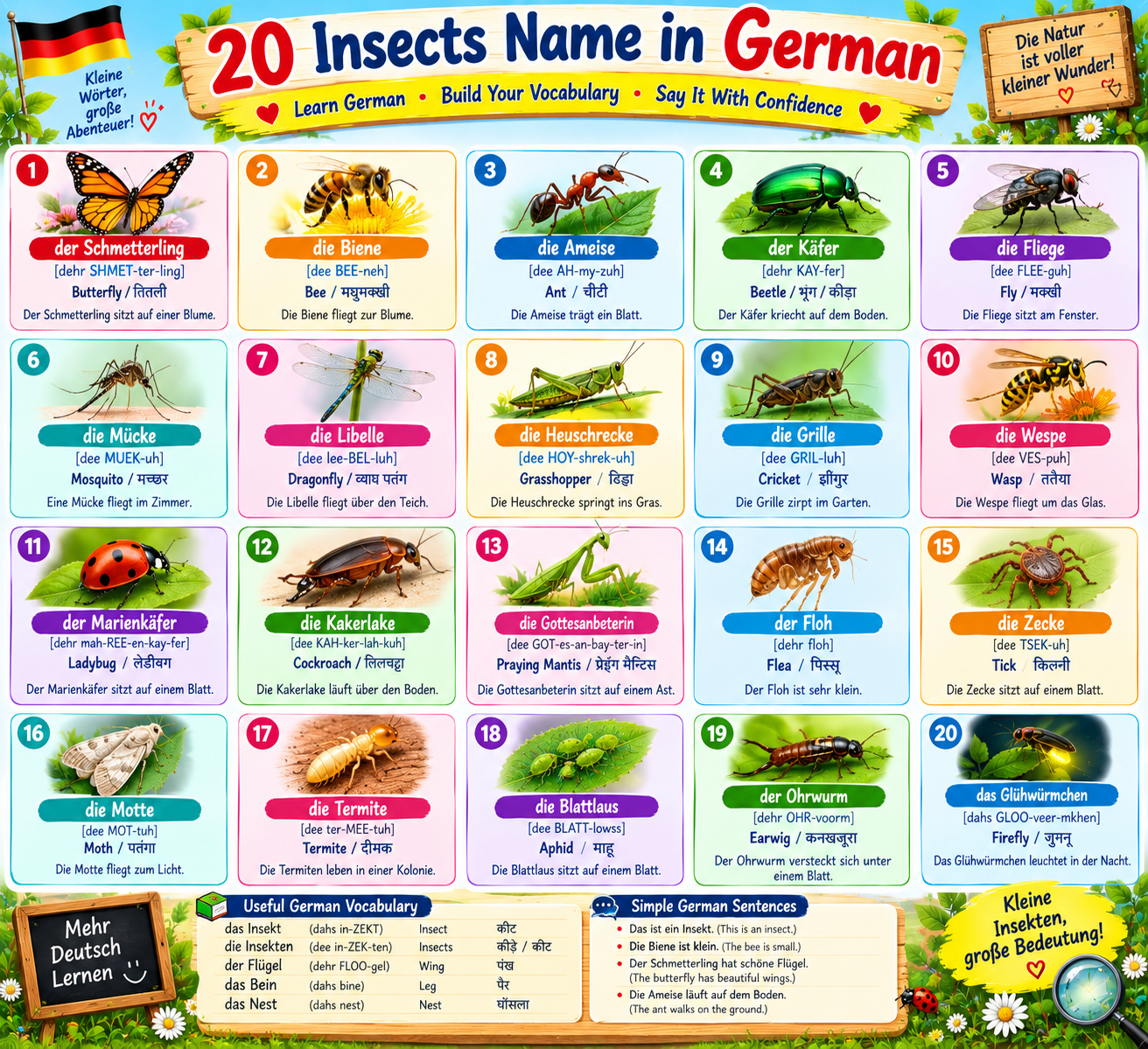
:German Insect Vocabulary with Pronunciation, English and Hindi Meanings
20 Insects Name in German : Learning the names of insects in German is a useful way to build everyday vocabulary and talk about nature, gardens, animals, and the environment. Insects appear frequently in conversations, children’s learning materials, nature studies, and German-language descriptions.
This article covers 20 insects name in German with their pronunciation, English meaning, Hindi translation, and simple German example sentences.
20 Insects Name in German
No.
German Insect Name
Pronunciation
English Translation
Hindi Translation
1
der Schmetterling
dehr SHMET-ter-ling
Butterfly
तितली
2
die Biene
dee BEE-neh
Bee
मधुमक्खी
3
die Ameise
dee AH-my-zuh
Ant
चींटी
4
der Käfer
dehr KAY-fer
Beetle
भृंग / कीड़ा
5
die Fliege
dee FLEE-guh
Fly
मक्खी
6
die Mücke
dee MUEK-uh
Mosquito
मच्छर
7
die Libelle
dee lee-BEL-luh
Dragonfly
व्याध पतंग
8
die Heuschrecke
dee HOY-shrek-uh
Grasshopper
टिड्डा
9
die Grille
dee GRIL-luh
Cricket
झींगुर
10
die Wespe
dee VES-puh
Wasp
ततैया
11
der Marienkäfer
dehr mah-REE-en-kay-fer
Ladybug
लेडीबग
12
die Kakerlake
dee KAH-ker-lah-kuh
Cockroach
तिलचट्टा
13
die Gottesanbeterin
dee GOT-es-an-bay-ter-in
Praying mantis
प्रेइंग मैन्टिस
14
der Floh
dehr floh
Flea
पिस्सू
15
die Zecke
dee TSEK-uh
Tick
किलनी
16
die Motte
dee MOT-tuh
Moth
पतंगा
17
die Termite
dee ter-MEE-tuh
Termite
दीमक
18
die Blattlaus
dee BLATT-lowss
Aphid
माहू
19
der Ohrwurm
dehr OHR-voorm
Earwig
कनखजूरा / ईयरविग
20
das Glühwürmchen
dahs GLOO-veer-mkhen
Firefly
जुगनू
20 insects name in german
Note: The pronunciations are simplified English-style guides for beginners. German pronunciation can vary slightly depending on regional accent.
German Insects Explained
1. Der Schmetterling – Butterfly
Der Schmetterling means butterfly in German. Butterflies are known for their colorful wings and are commonly seen in gardens and fields.
Example: Der Schmetterling sitzt auf einer Blume.
The butterfly sits on a flower.
2. Die Biene – Bee
Die Biene is the German word for bee. Bees are important pollinators and produce honey.
Example: Die Biene fliegt zur Blume.
The bee flies to the flower.
3. Die Ameise – Ant
Die Ameise means ant. Ants are social insects that usually live together in colonies.
Example: Die Ameise trägt ein Blatt.
The ant carries a leaf.
4. Der Käfer – Beetle
Der Käfer means beetle in German. The word refers to many different types of beetles.
Example: Der Käfer kriecht auf dem Boden.
The beetle crawls on the ground.
5. Die Fliege – Fly
Die Fliege means fly. Flies are common insects found around homes and outdoors.
Example: Die Fliege sitzt am Fenster.
The fly sits on the window.
6. Die Mücke – Mosquito
Die Mücke means mosquito. Mosquitoes are small flying insects known for biting.
Example: Eine Mücke fliegt im Zimmer.
A mosquito is flying in the room.
7. Die Libelle – Dragonfly
Die Libelle means dragonfly. Dragonflies are often found near ponds, lakes, and rivers.
Example: Die Libelle fliegt über den Teich.
The dragonfly flies over the pond.
8. Die Heuschrecke – Grasshopper
Die Heuschrecke means grasshopper. Grasshoppers are known for their powerful jumping legs.
Example: Die Heuschrecke springt ins Gras.
The grasshopper jumps into the grass.
9. Die Grille – Cricket
Die Grille means cricket. Crickets are known for their distinctive sounds.
Example: Die Grille zirpt im Garten.
The cricket chirps in the garden.
10. Die Wespe – Wasp
Die Wespe means wasp. Wasps are flying insects that can sting when threatened.
Example: Die Wespe fliegt um das Glas.
The wasp flies around the glass.
11. Der Marienkäfer – Ladybug
Der Marienkäfer means ladybug or ladybird. These small beetles are often recognized by their colorful bodies and spots.
Example: Der Marienkäfer sitzt auf einem Blatt.
The ladybug sits on a leaf.
12. Die Kakerlake – Cockroach
Die Kakerlake means cockroach. Cockroaches are insects that can live in warm and sheltered environments.
Example: Die Kakerlake läuft über den Boden.
The cockroach runs across the floor.
13. Die Gottesanbeterin – Praying Mantis
Die Gottesanbeterin means praying mantis. The insect gets its name from the position of its front legs.
Example: Die Gottesanbeterin sitzt auf einem Ast.
The praying mantis sits on a branch.
14. Der Floh – Flea
Der Floh means flea. Fleas are very small insects that can live on animals.
Example: Der Floh ist sehr klein.
The flea is very small.
15. Die Zecke – Tick
Die Zecke means tick. Ticks are tiny parasites that feed on the blood of animals and humans.
Example: Die Zecke sitzt auf einem Blatt.
The tick is sitting on a leaf.
16. Die Motte – Moth
Die Motte means moth. Moths are related to butterflies and include many different species.
Example: Die Motte fliegt zum Licht.
The moth flies toward the light.
17. Die Termite – Termite
Die Termite means termite. Termites are social insects that live in colonies.
Example: Die Termiten leben in einer Kolonie.
The termites live in a colony.
18. Die Blattlaus – Aphid
Die Blattlaus means aphid. Aphids are very small insects that commonly feed on plant sap.
Example: Die Blattlaus sitzt auf einem Blatt.
The aphid sits on a leaf.
19. Der Ohrwurm – Earwig
Der Ohrwurm is the German word for earwig. It is a small insect with distinctive pincers at the end of its body.
Example: Der Ohrwurm versteckt sich unter einem Blatt.
The earwig hides under a leaf.
20. Das Glühwürmchen – Firefly
Das Glühwürmchen means firefly. These insects are famous for producing a glowing light.
Example: Das Glühwürmchen leuchtet in der Nacht.
The firefly glows at night.
Useful German Vocabulary Related to Insects
German
Pronunciation
English
Hindi
das Insekt
dahs in-ZEKT
Insect
कीट
die Insekten
dee in-ZEK-ten
Insects
कीड़े / कीट
das Tier
dahs teer
Animal
जानवर
der Flügel
dehr FLOO-gel
Wing
पंख
das Bein
dahs bine
Leg
पैर
das Nest
dahs nest
Nest
घोंसला
der Garten
dehr GAR-ten
Garden
बगीचा
die Blume
dee BLOO-muh
Flower
फूल
fliegen
FLEE-gen
To fly
उड़ना
kriechen
KREE-khen
To crawl
रेंगना
springen
SHPRING-en
To jump
कूदना
Insects Found in the Garden
Many insects can be found around gardens and plants. Some are helpful to plants, while others can damage them.
die Biene – Bee
der Schmetterling – Butterfly
der Marienkäfer – Ladybug
die Libelle – Dragonfly
die Ameise – Ant
die Wespe – Wasp
die Blattlaus – Aphid
die Heuschrecke – Grasshopper
For example:
Die Biene besucht die Blume.
The bee visits the flower.
Der Schmetterling fliegt im Garten.
The butterfly flies in the garden.
Simple German Sentences About Insects
Practicing complete sentences makes it easier to remember German vocabulary.
Das ist ein Insekt.
This is an insect.
Die Biene ist klein.
The bee is small.
Der Schmetterling hat schöne Flügel.
The butterfly has beautiful wings.
Die Ameise läuft auf dem Boden.
The ant walks on the ground.
Die Libelle fliegt über das Wasser.
The dragonfly flies over the water.
Die Mücke fliegt im Zimmer.
The mosquito flies in the room.
Der Marienkäfer sitzt auf dem Blatt.
The ladybug sits on the leaf.
Die Heuschrecke springt hoch.
The grasshopper jumps high.
Die Wespe fliegt im Garten.
The wasp flies in the garden.
Das Glühwürmchen leuchtet in der Nacht.
The firefly glows at night.
Quick Revision: 20 Insects Name in German
der Schmetterling – Butterfly
die Biene – Bee
die Ameise – Ant
der Käfer – Beetle
die Fliege – Fly
die Mücke – Mosquito
die Libelle – Dragonfly
die Heuschrecke – Grasshopper
die Grille – Cricket
die Wespe – Wasp
der Marienkäfer – Ladybug
die Kakerlake – Cockroach
die Gottesanbeterin – Praying Mantis
der Floh – Flea
die Zecke – Tick
die Motte – Moth
die Termite – Termite
die Blattlaus – Aphid
der Ohrwurm – Earwig
das Glühwürmchen – Firefly
Frequently Asked Questions
1. How do you say insect in German?
Insect is das Insekt in German.
2. How do you say butterfly in German?
Butterfly is der Schmetterling in German.
3. How do you say bee in German?
Bee is die Biene in German.
4. How do you say ant in German?
Ant is die Ameise in German.
5. How do you say beetle in German?
Beetle is der Käfer in German.
6. How do you say fly in German?
Fly is die Fliege in German.
7. How do you say mosquito in German?
Mosquito is die Mücke in German.
8. How do you say dragonfly in German?
Dragonfly is die Libelle in German.
9. How do you say grasshopper in German?
Grasshopper is die Heuschrecke in German.
10. How do you say cricket in German?
Cricket is die Grille in German.
11. How do you say wasp in German?
Wasp is die Wespe in German.
12. How do you say ladybug in German?
Ladybug is der Marienkäfer in German.
13. How do you say cockroach in German?
Cockroach is die Kakerlake in German.
14. How do you say praying mantis in German?
Praying mantis is die Gottesanbeterin in German.
15. How do you say flea in German?
Flea is der Floh in German.
16. How do you say tick in German?
Tick is die Zecke in German.
17. How do you say moth in German?
Moth is die Motte in German.
18. How do you say termite in German?
Termite is die Termite in German.
19. How do you say aphid in German?
Aphid is die Blattlaus in German.
20. How do you say firefly in German?
Firefly is das Glühwürmchen in German.
Conclusion
Learning 20 insects name in German is a simple way to expand your vocabulary and talk about nature, gardens, and the environment. Words such as der Schmetterling, die Biene, die Ameise, die Libelle, der Marienkäfer, and das Glühwürmchen are useful additions to a beginner’s German vocabulary.
For better retention, learn each noun together with its article—for example, die Biene, not simply Biene. Practice the words regularly and use them in short sentences to become more confident with German vocabulary.